


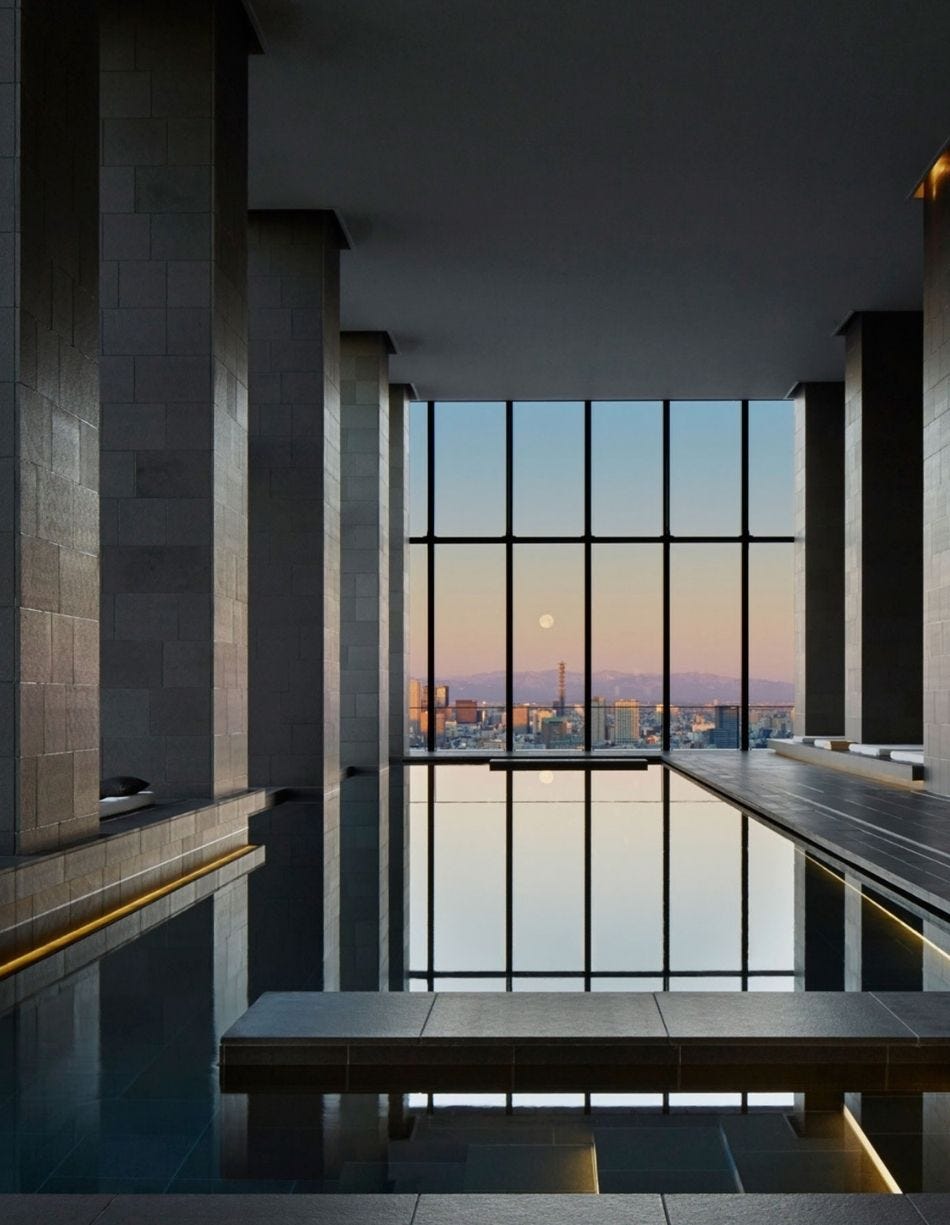
Aman Residences, Tokyo: the hotel was only the beginning
There is a conversation that keeps coming up.
Not in one city or one market, but across the rooms where developers, investors and operators are making decisions about where capital goes next. The language changes depending on who is in the room. But the question underneath is always the same.
What is this asset, really?
Is it a hotel that happens to have residences attached? Is it a members club that happens to have hotel rooms? Is it a real estate play that uses hospitality as the brand layer? The answer, increasingly, is that the distinction no longer holds. The hotel is no longer the business. It is the proof of concept. The thing that justifies the residential pricing, anchors the membership, creates the sense of place that makes everything around it more valuable.
That convergence is what Edition Insider is built to track. Not the announcements; there are enough publications covering those. The underlying structure. The deals that signal where institutional capital is repositioning. The operators building platforms rather than properties. The markets being quietly repriced before the consensus catches up.
This is the first issue. Each one builds from here.
Nicholas
In this issue:
The Thesis: The Hospitality Operating System. A hotel room lasts a night. A residence lasts decades. A membership can last even longer. What happens when one brand owns all three relationships?
The Profile: From Studio 54 to the boutique hotel: five decades of taste, subversion and reinvention. Ian Schrager in conversation with Nicholas Meimaris.
The Deal: Five transactions revealing where capital is moving across property and hospitality.
The List: Selected opportunities in property, hospitality and capital.
The Convergence Issue
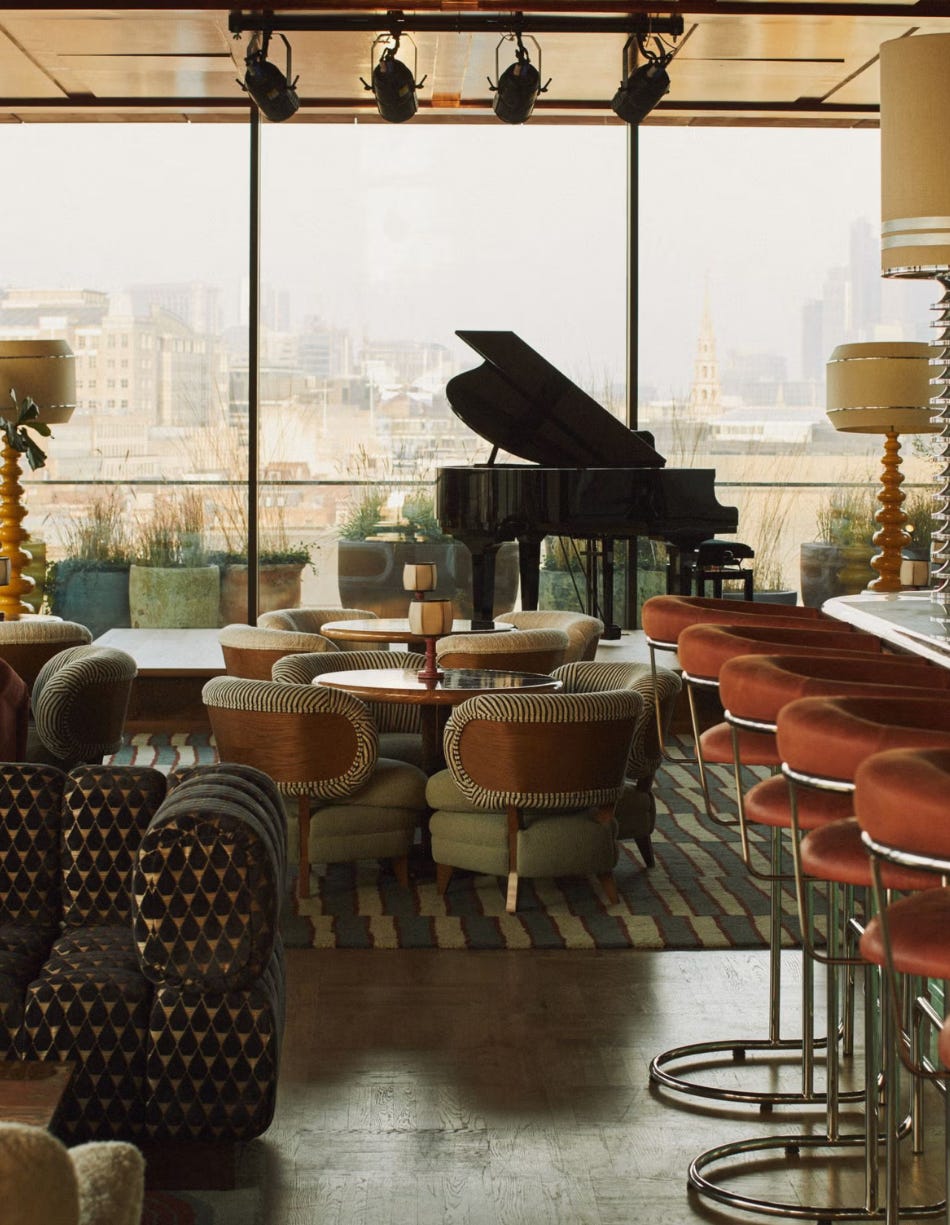
Soho House, Tokyo: membership as the model
The Hospitality Operating System
For decades, hospitality and real estate operated as related but separate businesses.
The hotel was an operating asset. The residence was a real estate asset. The club was a membership business. Each had its own economics, its own operators, its own buyer.
That separation is dissolving, and the most interesting capital in the market is moving into the space where the categories used to divide.
Look at where serious luxury development is happening now and the boundaries blur. Hotels are wrapped in residences. Residences are wired into clubs. Clubs are fed by restaurants and wellness. The building still matters. But it is no longer the product.
The hotel is no longer the business.
It is the proof of concept: the thing that establishes the brand, the service and the credibility that everything around it is priced against.
The hotel establishes the world; the residence monetises it
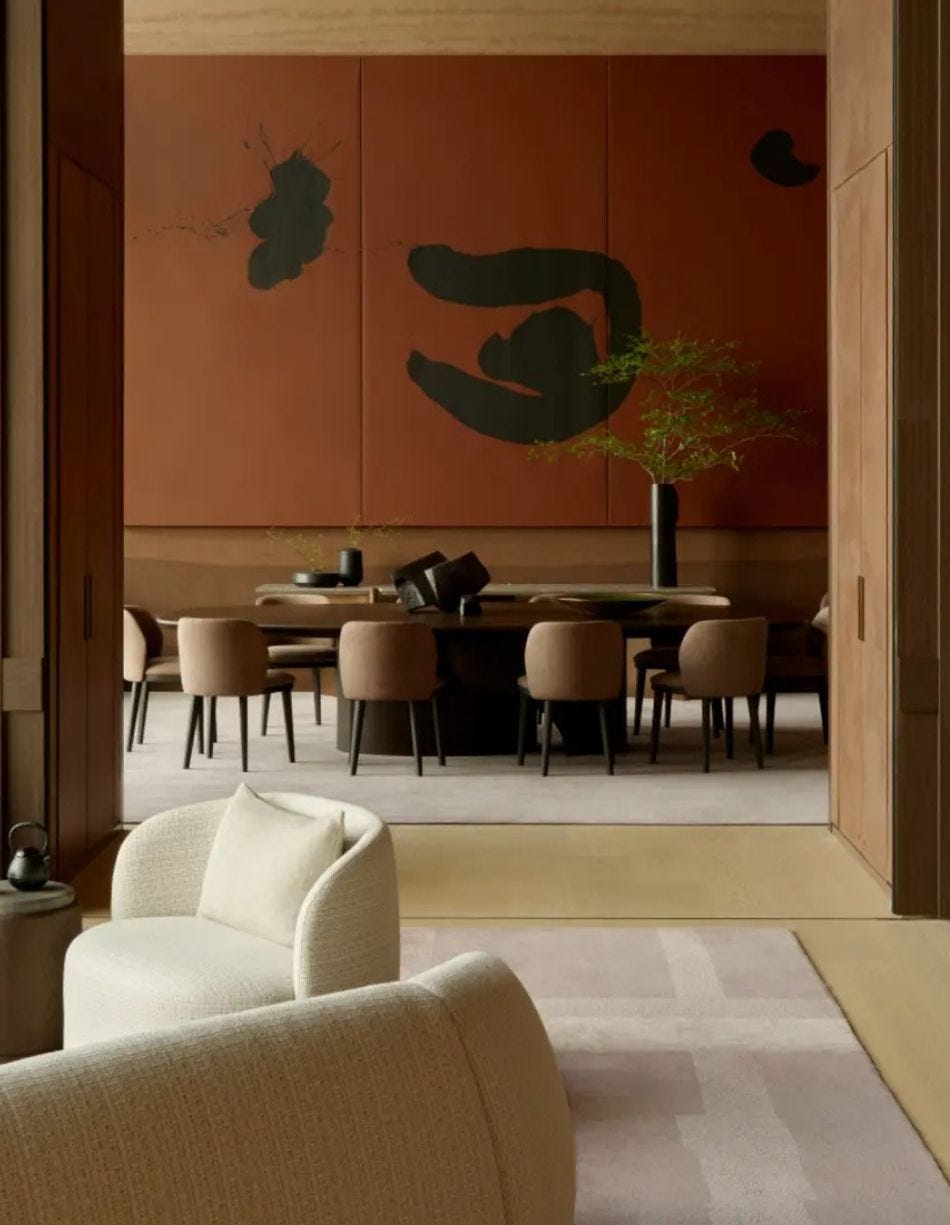
Aman Residences, Tokyo: a stay becomes an ecosystem
Aman is the clearest case.
Aman’s value was never confined to the room.
The brand is a specific promise of privacy, design, service and access, and once that promise exists it can be sold as ownership and as membership, not only as a stay. The hotel creates the world.
The residence lets you own a piece of it.
The club lets you belong to it.
Watch how the capital is arranged around that.
This summer Vlad Doronin’s OKO Group, which develops for Aman, and Korea’s Shinsegae committed an initial $500 million to a venture developing Aman and Janu hotels, residences and mixed-use projects, and are already working on a Gangnam tower pairing an Aman hotel with residences and a private club. The partner funds the building. Aman keeps the brand, the pricing power and, in my reading, the recurring membership revenue that sits on top of the room.
That is the model in a single transaction.
The real estate is the commodity.
The reason anyone pays Aman prices is not.
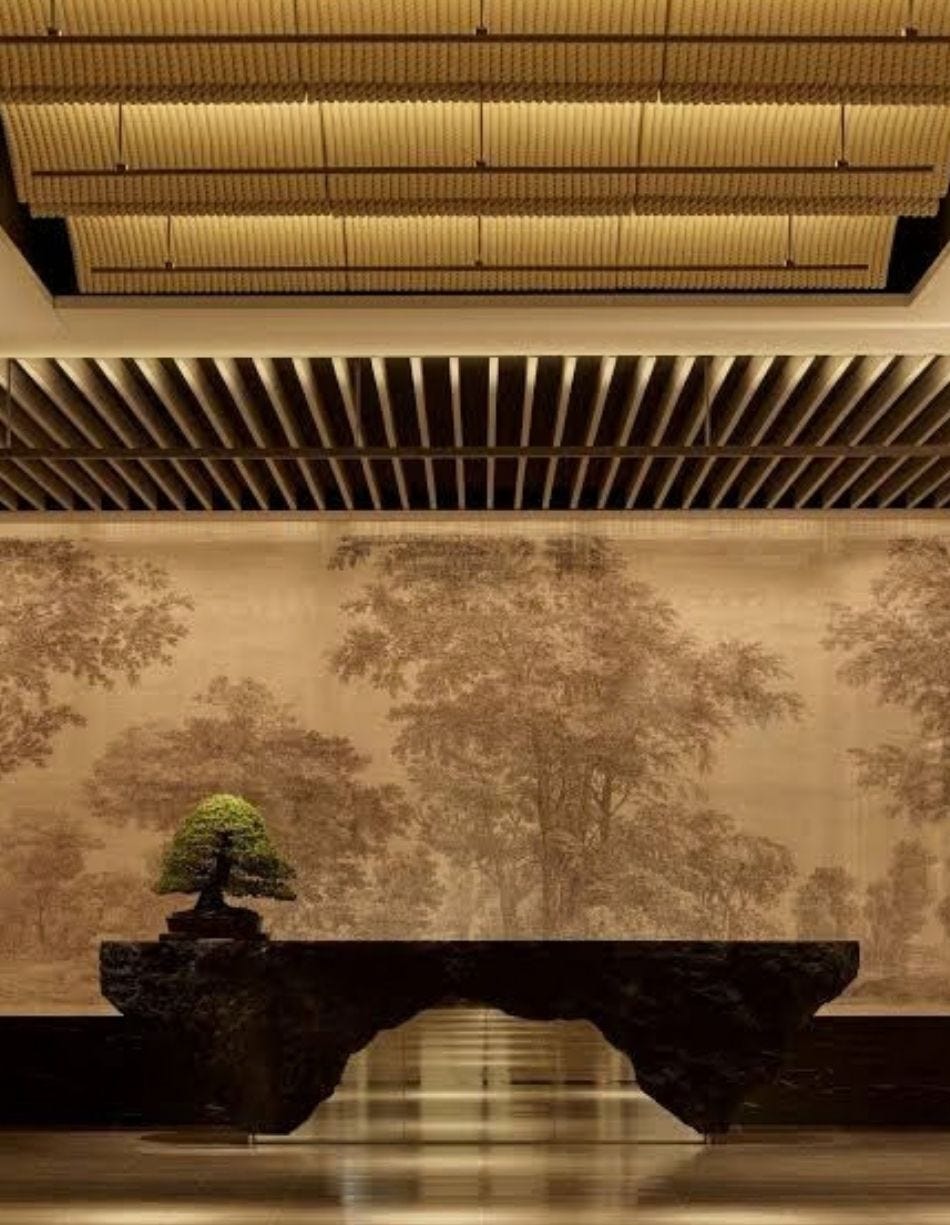
Janu, Tokyo: Aman's logic, a new audience
The room is no longer where the value is
The sharpest tell is in the numbers the operators themselves now quote.
Ennismore, the platform behind The Hoxton, Delano, SLS and a dozen more, says more than 60% of its revenue is now generated outside the four walls of the guest room. The restaurants, the bars, the membership, the design: the room has become the least interesting line on the page.
Four Seasons makes the same point from the ownership side. Across the market, branded residences command a premium of roughly a third over comparable unbranded homes, and Four Seasons is now selling residences with no hotel attached at all. Buyers are not paying for the building; they are paying for the operating standard that comes with it. When the service brand alone can carry a residential tower, the building has become the platform and the operator has become the asset.
Convergence runs both ways
It does not only run hotel-outward.
Soho House began at the other end, community first and real estate second, and expanded from membership into hotels, restaurants and residences. Different starting point, same destination: a recurring relationship with the customer in place of a one-night transaction.
But Soho House is also the cautionary half of the story, and it belongs in the same breath. The company went private in January in a deal valuing it at roughly $2.7 billion, in part because the model proved almost impossible to run under public-market pressure to grow. Which points to the thing the convergence thesis usually leaves out.
The ecosystem is harder than the building
An operating system is far harder to underwrite than a room-revenue model, and far harder to build.
I learned that at Marina Bay Sands. I was involved at the intersection of placemaking, brand strategy and commercial partnerships, contributing to the positioning of the destination, its cultural programming and the strategic relationships that helped translate the vision for Marina Bay Sands into a landmark integrated resort. Almost none of that work happens in the room, and almost none of it shows up in an underwriting model.
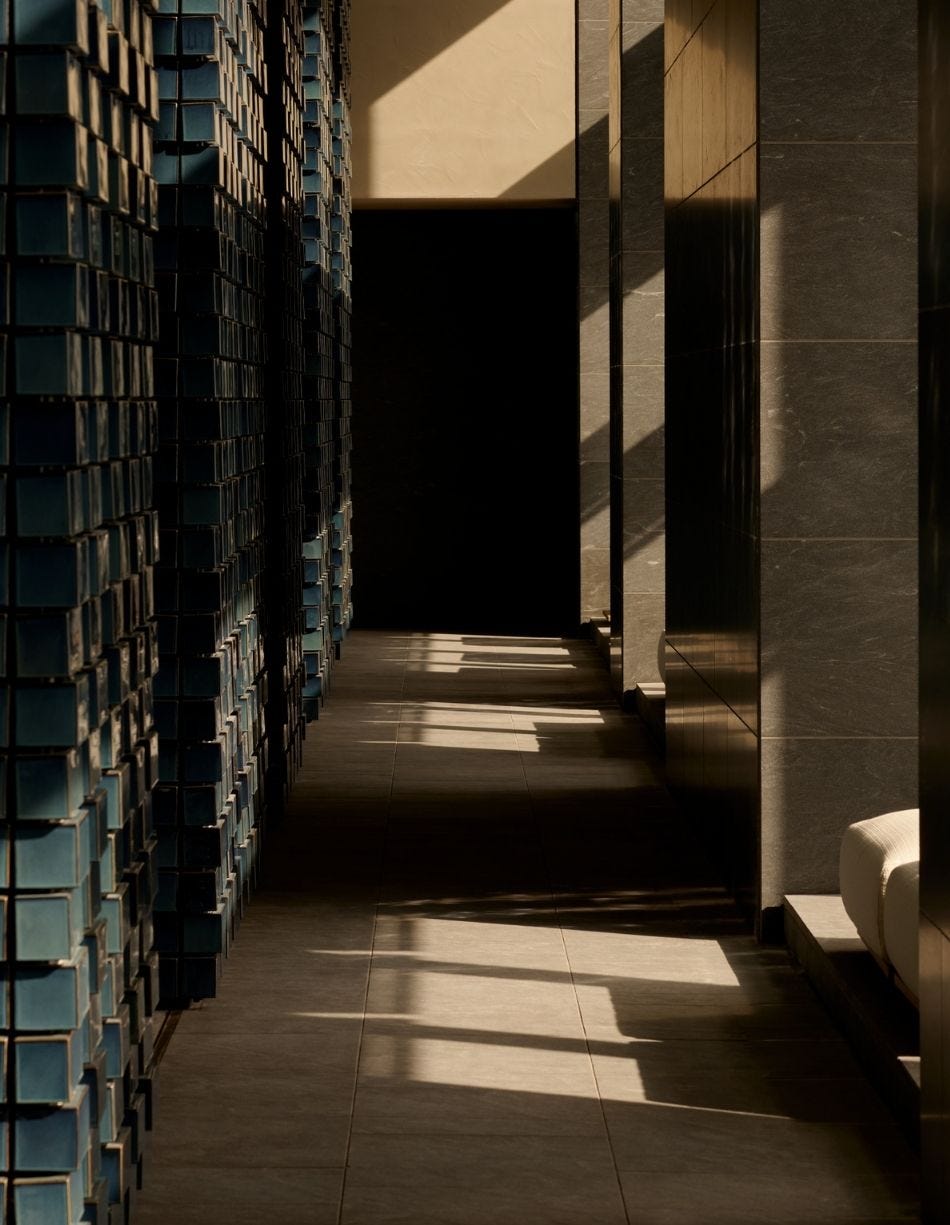
Aman Residences, Tokyo: access is now the asset
A hotel that fills rooms is legible to a lender. An ecosystem (hotel plus residences plus club plus restaurants plus wellness, each depending on the others) is a more fragile machine. When the operator falters, the whole stack falters with it. Most developers cannot actually build one, and a badly run ecosystem is worth less than a well-run simple asset, not more. The premium is real, but it is a premium on execution, not on the idea.
That is the line the next cycle will draw. Not between those who add a residential component and those who don’t, since nearly everyone now does, but between operators who can make the parts reinforce one another and those who have merely assembled them in the same place.
What the asset becomes
Location will still matter. Architecture will still matter. Scarcity will still matter. They set the floor.
The ceiling is set by everything harder to value: who operates it, who belongs there, what happens there, and how many reasons there are to come back.
The strongest asset is no longer the one with the best address. It is the one that creates the most relationships around a single piece of ground, and the company that captures the most value may not look like a real estate company at all.
It will look like a hotel group. A club. A wellness brand. A platform.
Because the winners will not own the building. They will own the reason to be there.
The Profile
EDITION Profiles: The people shaping property, hospitality and capital.
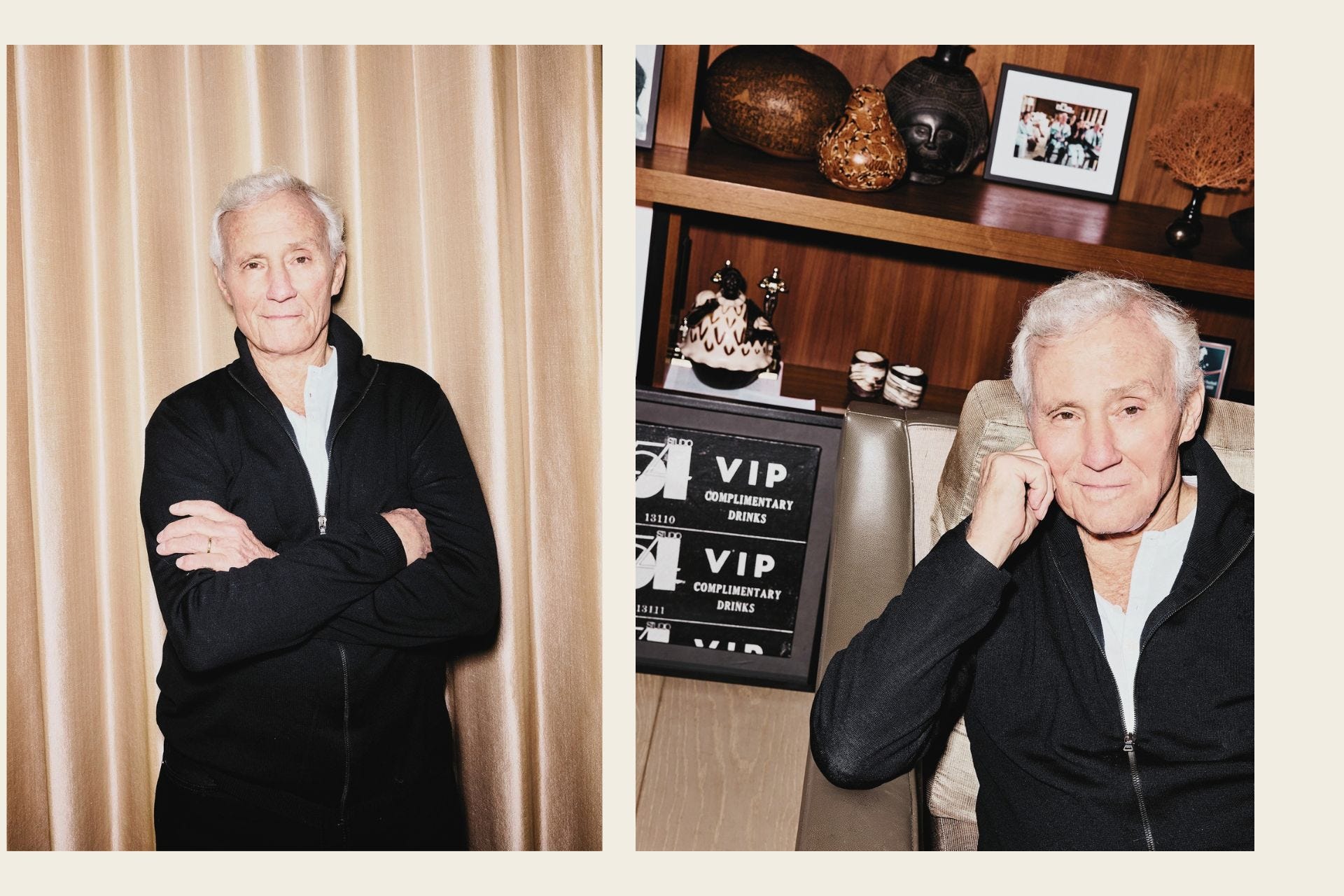
I sat down with Ian Schrager because no one has done more to prove this issue’s thesis, long before it had a name. From Studio 54 to the boutique hotel, he has spent five decades designing for how people feel and behave inside a space, not where they sleep. At Morgans he wanted guests to feel they were walking into a private home. At PUBLIC West Hollywood, the rooftop park and a James Turrell-lit nightclub carry as much weight as the 137 rooms.
We talked about Steve Rubell, the cultural forces behind Studio 54, his work with Philippe Starck and Arata Isozaki, and why the most enduring ideas often begin by breaking the rules.
Read the full interview: Ian Schrager And The Art Of Subversion
To enquire privately or be considered for a profile, contact insider@edition-x.com.
The Deal
Five transactions worth understanding, and what they signal.
Kempinski acquires Augustine Hotel, Prague
First acquisition in over 50 years · Heritage asset · Wholly owned, full operational control · Reflag to Kempinski after refurbishment
The signal: At the ultra-luxury end, asset-light is no longer enough. Brand alone cannot deliver a truly differentiated product; ownership, or at least control, increasingly can.
Reuben Brothers and Crown Onyx acquire The Esplanade on Worth Avenue, Palm Beach
$200M · About $1,553 PSF · Nearly double the 2014 trade
The signal: This is not a single acquisition. It is placemaking at market level: the group is assembling retail, hospitality and social infrastructure across Palm Beach into a single ecosystem. Watch the broader accumulation strategy, not just this deal.
L Catterton Real Estate and Cedar Capital Partners joint venture: 10 to 15 luxury hotels, Europe and North America
LVMH-affiliated · Consumer insight meets real estate execution
The signal: Luxury hospitality is not a brand play alone. It requires operational depth and asset-level expertise. This structure acknowledges that explicitly.
OneIM, AENDRE and LHC acquire The Other House portfolio, London
587 keys · Three freehold sites: South Kensington, Covent Garden, Belgravia · Bought from APG · First reopening under a new brand in 2027
The signal: This is platform building, not a single asset play. Each site will run as an extended-stay residence, a wellness members’ club and a farm shop under one brand: the convergence thesis as an operating model. The test is execution. The brand is being rebuilt, not inherited.
Related Group and Integra Investments advance The St. Regis Residences, Miami
152 residences · One 50-storey tower · Robert A.M. Stern Architects · Completion 2027 · Ultra-prime positioning
The signal: Miami has become a full-time global wealth market. If this sells through, it confirms that branded residences are now the default structure for luxury development in gateway cities. The risk is the growing pipeline of branded towers diluting the premium.
To enquire privately or feature an opportunity contact: insider@edition-x.com
The List
Selected opportunities in property, hospitality and capital.
Beachfront Five-Star Resort, Mykonos
Off-market · 42 suites and two private villas · Private beach, spa, three restaurants, 12 pools · Asking €45M
The rooms are not the scarce part. Outside the town plan, new hotel permits on Mykonos have been frozen since 2020, a freeze now extended to the end of 2026, and stricter island planning is on the way. What a buyer is really acquiring is the beach, the villas and a food and wellness offer that can be priced well above the room.
Suits: family offices and hospitality platforms seeking a trophy Aegean asset with an operating repositioning case.
Express interest: insider@edition-x.com, subject “The List: Mykonos”.
Lighthouse Concessions, Sicily and the Aeolian Islands
Italian state tender · Four lots: Ustica, Vulcano, Favignana, Riposto · Concessions of up to 50 years · Bids close 11 December 2026
Italy is handing heritage lighthouses to private operators for hospitality, culture and sustainable tourism. Nobody buys the building; the winner buys the right to run an experience no one else can build. The Faro di Gelso on Vulcano, inside a UNESCO-listed archipelago, offers about 380 sqm of keepers’ quarters facing open sea.
Suits: boutique operators, experiential brands and family offices prepared to restore under heritage supervision.
Express interest: insider@edition-x.com, subject “The List: Lighthouses”.
Six Senses Residences, Comporta, Portugal
58 branded residences · Two to five bedrooms, 210 to 1,400 sqm · Alongside a 70-key Six Senses hotel · Sales launched May 2026
This is the thesis built from the ground up. VIC Properties broke ground in May and opened sales at the same time, so the residences fund and anchor the resort while the hotel gives them their meaning. Owners get a dedicated lounge, concierge and privileges across Six Senses worldwide. Comporta is where buyers look once the Algarve feels finished.
Suits: private buyers and family offices wanting an early position in Six Senses’ first branded residences in Portugal.
Express interest: insider@edition-x.com, subject “The List: Comporta”.
Entitled Hotel Site, Sunset Boulevard, Los Angeles
175 keys entitled · 13 storeys, about 124,000 SF · 12,500 SF food and beverage programme · Three labour peace agreements in place · Asking $9.5M to $9.98M
In Los Angeles, time is the cost. This corner at Sunset and Cahuenga comes fully entitled and designed, with union agreements already signed and transferable, in an Opportunity Zone ahead of the 2028 Olympics. The asking price works out at under $60,000 per buildable key. The rooftop and dining programme is where a lifestyle operator would make its name.
Suits: developers and lifestyle operators wanting a construction-ready Hollywood position.
Express interest: insider@edition-x.com, subject “The List: Sunset”.
Growth Partner Search, San Vicente Bungalows, Los Angeles and New York
Strategic investment · Clubs in West Hollywood, Santa Monica and New York · Advised by Goldman Sachs and JLL · Expansion planned
The most sought-after membership in Hollywood is looking for capital to grow. Founder Jeff Klein, backed by Ohana Real Estate Investors, has said he wants a partner, not an exit, and that new locations must protect the exclusivity. A club like this earns from belonging, not occupancy, which is exactly why capital is circling.
Suits: family offices, sovereign-backed hospitality groups and platform investors who can add reach without diluting the brand.
Express interest: insider@edition-x.com, subject “The List: San Vicente”.
To put an opportunity in front of Insider members, write to insider@edition-x.com.
That’s it for No. 001. More next month.
Nicholas